
The Ultimate Fall Home Heating Prep Checklist
1. Start with Airflow
Good airflow makes every other fall maintenance task work better.
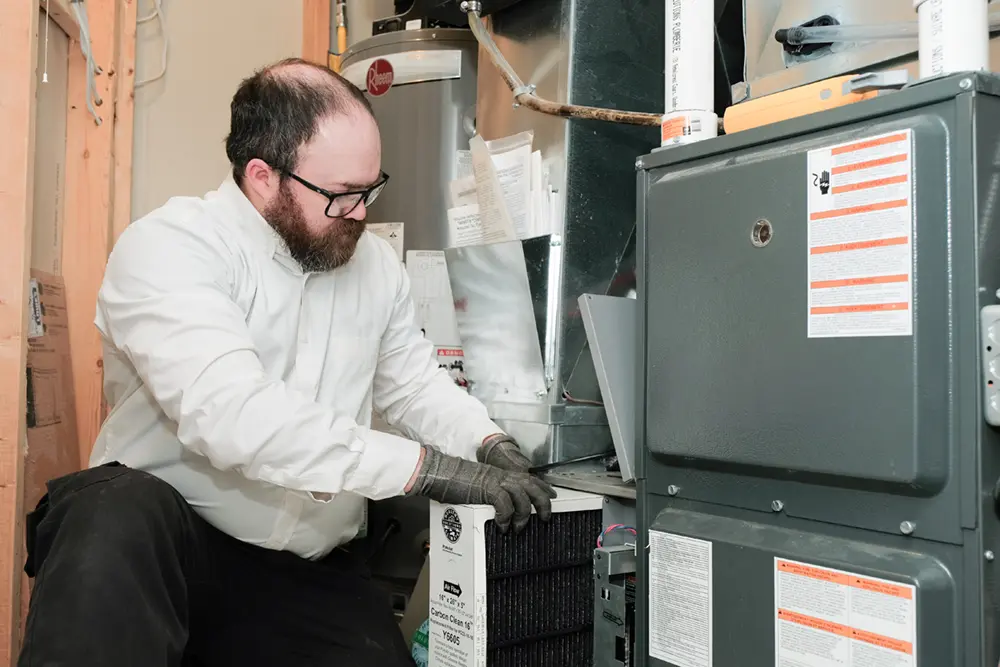
- Replace or clean the furnace filter. A clogged filter makes the blower work harder and can reduce comfort. Natural Resources Canada (NRCan) recommends checking filters regularly during the heating season.
- Open and clear all supply and return vents. Do a quick walk of the main floor, basement, and any finished attic space. Make sure furniture, boxes, drapes, or pet beds are not blocking floor registers or large return grilles.
- Vacuum registers and grilles. A quick vacuum around registers helps keep dust out of the system.
- If some rooms are still cold, that is usually a sign for a technician to look at duct balancing or blower settings. That part should not be a do-it-yourself task.
2. Test CO and Smoke Alarms Before the Heating Season
When windows close and fuel-burning equipment runs longer, the risk of carbon monoxide increases. Health Canada and Ontario guidance advise homeowners to test CO alarms regularly and to maintain fuel-burning appliances annually.
- Test every CO alarm and smoke alarm using the test button.
- Install CO alarms outside sleeping areas and on every storey that has a fuel-burning appliance, fireplace, or attached garage, in line with Ontario requirements. Your local fire department may recommend alarms on every level.
- Replace batteries if they are weak, and check the device’s expiry date.
- If the furnace, fireplace, or other fuel-burning appliance has not been inspected in the past 12 months, book a visit with Home Aire Care so a licensed technician can check the heat exchanger, burners, and venting.
Homeowners can test alarms and replace batteries. Opening sealed furnace panels, changing gas settings, or repairing venting must be done by a licensed technician.
3. Walk the Outside of the House
Leaves, grass, and early wet snow in the Quinte area can quickly block outdoor terminations, especially in October and November when conditions remain damp.
- Find the furnace exhaust and fresh air intake. Clear away leaves, cobwebs, grass, and debris.
- Check the dryer and HRV or ERV hoods at the same time. Good ventilation helps manage indoor humidity once the house is shut for winter.
- Make sure no one has stored bins, boxes, or garden tools in front of the equipment or in the furnace room. Combustion appliances need space around them to operate and to be serviced.
If you see damaged piping, ice buildup, or repeated blockages, call for service. Do not try to repair sealed vent systems yourself.
4. Set the Thermostat for Fall
A lot of no-heat calls in the first cold week are really thermostat problems.
- Change the system from cooling to heat and run a short test cycle now. Listen for odd starts, short cycling, or cool air.
- Pick a realistic occupied setpoint, usually around 20-21°C for most families.
- Set a modest overnight setback. In colder Ontario weather, deep setbacks can make the furnace run for a long time to recover, which feels uncomfortable.
- If you recently installed a smart thermostat, have the technician confirm compatibility and wiring during your tune-up.
5. Support the Furnace with Insulation and Draft Fixes
Older homes in Trenton, Belleville, and Quinte sometimes lose heat through the attic, the basement, or around older windows.
- Weather strip exterior doors and seal obvious drafts.
- Add or top up attic and basement insulation in accordance with NRCan guidance. Better insulation helps the furnace run shorter cycles.
- Keep the basement supply and return paths open so the furnace is not trying to heat against blocked ductwork.
These steps do not replace mechanical maintenance. They support it, and they reduce how hard the furnace has to work once the cold settles in.
6. Book the Professional Maintenance Visit
A licensed technician should always perform checks before the heating season; see why HVAC maintenance is important for homeowners. A Home Aire Care fall visit can include a complete furnace inspection and cleaning, combustion and venting review, blower and temperature rise checks, and thermostat verification. This is the safest way to make sure fuel-burning appliances are operating correctly. A visit typically takes about an hour, depending on the system and the level of access.
Fall is also the best time to have a technician inspect add-ons such as humidifiers, UV air purifiers, and other indoor air quality equipment. When these are cleaned and set correctly before winter, the home is more comfortable at a lower setpoint, which can help manage energy use. During the same appointment, ask about Maintenance Plans so these inspections are scheduled automatically every year, and so filter changes, CO checks, and venting checks do not get missed.
7. Finish with a Clear Plan
You can handle filters, vents, thermostat settings, weather stripping, and alarm testing. A technician should handle combustion, venting, electrical diagnostics, and any issues inside the furnace cabinet. Doing both parts is how you arrive at a comfortable, efficient, and safe home for the whole heating season.
Book your fall furnace tune-up with Home Aire Care, or enroll in a Maintenance Plan so next year’s inspection, filter care, and safety checks are already in the calendar.